
The Dua of Prophet Yunus is very famous among the Muslim world, as Ayat-e-Kareema is the most powerful Quranic Dua for overcoming impossible difficulties, intense anxiety, and a feeling of helplessness.
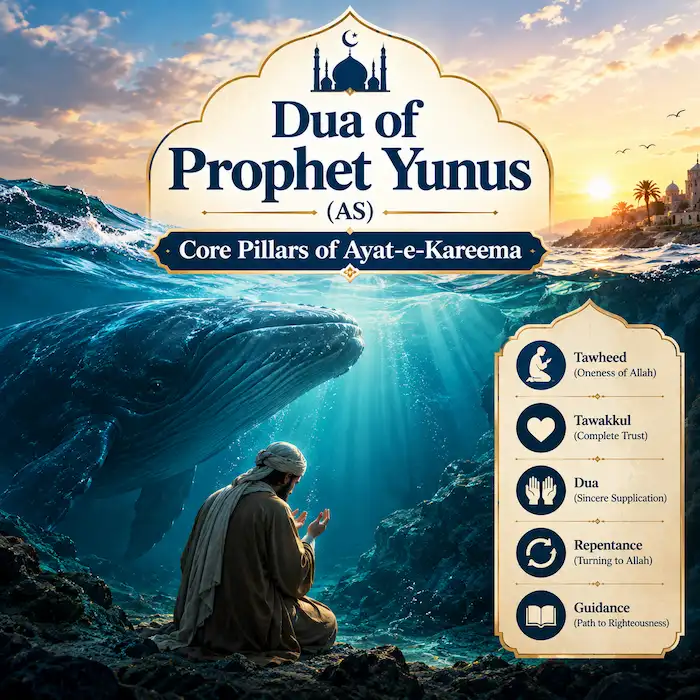
Prophet Yunus called upon that there are three layers of darkness: the darkness of the deep ocean, the darkness of the belly of the whale and the darkness of the night.
The Prophet Muhammad said:
“The supplication of Dhun-Nun (Prophet Yunus) when he called upon Allah from the belly of the whale: ‘There is no deity except You; exalted are You. Indeed, I have been of the wrongdoers.’ No Muslim ever calls upon Allah with these words for any matter, except that Allah answers his prayer.”
— Jami at-Tirmidhi (Hadith 3505)
Dua of Prophet Yunus
لَّا إِلَٰهَ إِلَّا أَنتَ سُبْحَانَكَ إِنِّي كُنتُ مِنَ الظَّالِمِينَ
Pronunciation: Laaa ilaaha illaa Anta subhaanaka innee kuntu minaz-zaalimeen.
Dua of Prophet Yunus in English: “There is no deity except You; exalted are You. Indeed, I have been of the wrongdoers.”
Dua of Prophet Yunus: “तेरे सिवा कोई सच्चा माबूद (पूज्य) नहीं, तू हर ऐब और कमी से पाक है, बेशक मैं ही ज़ालिमों (क़सूरवारों) में से था।”
Source: Surah Al-Anbiya (Quran 21:87)
Core Pillars of Ayat-e-Kareema (Acceptance)
- Laa ilaaha illaa Ant (Tawhid): Knowing that no one can save you except Allah, as absolute power belongs to Allah.
- Subhaanaka (Tasbeeh): You need to believe that Allah is free from imperfection, cruelty, or unfairness, affirming that whatever hardship you are in is not an injustice from Allah.
- Innee kuntu minaz-zaalimeen (Tawbah & Humility): You must accept your own shortcomings, sins, and mistakes without blaming others before your Creator.
Quranic Context – How Allah Responded
Allah gives an eternal guarantee to every believer who reads this Dua until the Day of Judgement-
فَاسْتَجَبْنَا لَهُ وَنَجَّيْنَاهُ مِنَ الْغَمِّ ۚ وَكَذَٰلِكَ نُنجِي الْمُؤْمِنِينَ
Pronunciation: Fastajabnaa lahoo wa najjaynaahu minal-ghamm, wa kadhaalika nunjil-mu’mineen. (Quran 21:88)
Meaning: “So We responded to him and saved him from the distress. And thus do We save the believers.”
How to use Ayat-e-Kareema for Personal Needs
- Sincere Istighfar in Sujood (Prostration): The servant is closest to Allah during prostration. Recite Laa ilaaha illaa Anta subhaanaka innee kuntu minaz-zaalimeen in your voluntary prayers (Nafl), followed by your personal dua.
- During Moments of Panic & Anxiety: Whenever you receive distressing news, feel trapped in legal or financial troubles, or face a medical diagnosis, replace silent worry with the continuous repetition of this dua.
- After Farz Salah: Integrate it into your daily dhikr routine after finishing obligatory prayers.
You can also read – Dua for Parents.
Frequently Asked Questions (FAQs)
There is no fixed time to read and can be read any time of the day or night.
Yes, you can read the Dua of Prophet Yunus during your periods. It is fully permissible to read it during menstruation.
No, it is not spiritually compulsory; it is just a cultural tradition developed for major crises. You can read it any number of times.
If you want more details about daily life Duas, you can visit islamicdua.guide.
Pingback: Dua for Forgiveness (Astaghfirullah Dua) - Daily Astaghfirullah Dua - islamicdua.guide